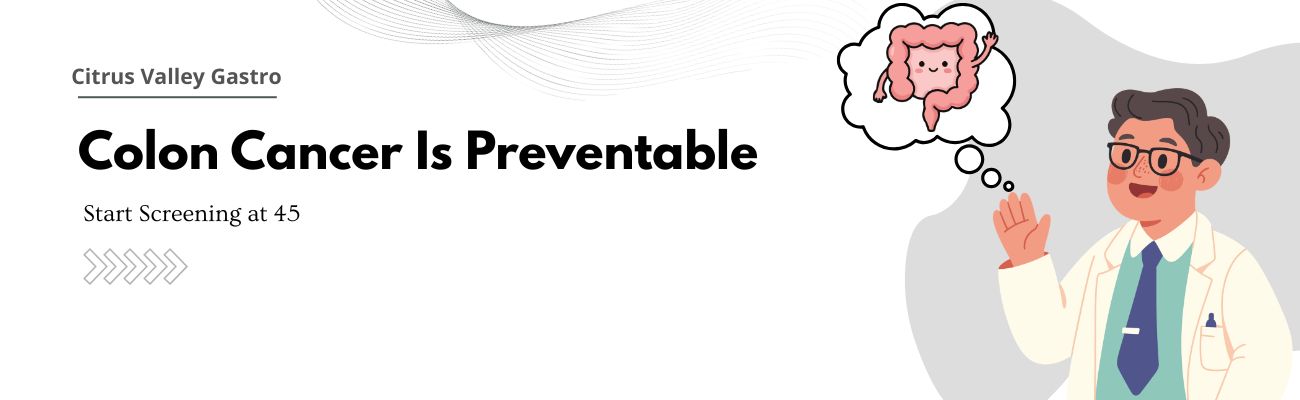
In recent years, the conversation surrounding colorectal health has shifted from a senior issue to a national priority. The headlines have served as a wake-up call for many Americans. We were deeply inspired by the legacy of Chadwick Boseman, who fought a secret battle with colon cancer at his prime in his career. More recently, the passing of James Van Der Beek in February 2026 has once again put a spotlight on the reality of this disease.
These stories are deeply personal, but they serve a great purpose: they remind us that colorectal cancer does not discriminate by age or fitness. As we observe Colorectal Cancer Awareness Month this March, we must focus on the most important question: How can I prevent Colorectal Cancer?
What is Colorectal Cancer?
Colorectal Cancer is a disease that starts either in the large intestine (colon) or the rectum. In most cases, the disease originates as small, noncancerous growths known as polyps and precancerous growths. Over several years, a few of these polyps may develop into cancer.
The main factor that makes early screening for colon cancer so efficient is the fact that doctors are able to detect and get rid of these polyps during a colonoscopy before they ever have the chance to become malignant. Colon Cancer is not only treatable, but it is often preventable when it is detected in the early stages of its progression.
How Do I Prevent Colon Cancer?
Colon Cancer prevention is a two-fold strategy that involves active lifestyle, awareness, and medical intervention. While you cannot change your genetics or a family history of CRC, you can control your screening schedule.
1. The Gold Standard: Early Screening
The most effective way to prevent colon cancer is through regular screenings. The current guidelines in the United States suggest that people with an average risk should start the screening at age 45. When considering stool-based tests vs.
colonoscopy, it is important to understand the unique colonoscopy benefits, such as the ability to treat and prevent cancer in a single session.
- Colonoscopy: It is the only test that allows a GI specialist to both find and remove polyps during the same procedure.
- Stool-based Tests: Tests such as FIT or Cologuard can detect DNA changes or blood, but any positive result requires a follow-up colonoscopy.
2. Recognize the Symptoms Early
Early-stage colon cancer often has no symptoms. However, as the disease progresses, you may notice:
- Persistent changes in bowel habits: Diarrhea, constipation, or stool consistency.
- Rectal bleeding: Bright red or very dark/tarry stools.
- Abdominal pain: Constant gas, bloating, or cramping.
- Unexplained weight loss: Losing weight without trying.
- Extreme fatigue: It is common because anemia is a result of internal bleeding.
3. Lifestyle and Gut Health
Following specific colorectal cancer prevention tips can significantly lower your risk. Research suggests that a diet high in fiber and low in processed meats can reduce your risk by improving dietary fiber and gut health.
- Increase Fiber: Whole grains and leafy greens provide a healthy gut microbiome.
- Limit Processed Meats: High intake of deli meats and bacon is linked to increased risk.
- Regular Exercise: Staying active helps maintain a healthy weight and reduces systemic inflammation.
The Legacy of Awareness: Boseman and Van Der Beek
When public figures like Chadwick Boseman and James Van Der Beek share their journeys, it removes the stigma of gastrointestinal health. Their stories remind us that
colon cancer symptoms in young adults are becoming more frequent.
Chadwick Boseman's passing at age 43 and James Van Der Beek's recent battle at age 48 highlight an emerging trend of early-onset colorectal cancer in the U.S. When we speak about such cases, we forget all about the embarrassment and proceed to the life-saving medical care.
March: Colorectal Cancer Awareness Month
March is Colorectal Cancer Awareness Month in the U.S. and worldwide. This month is a global effort to spread the word that colorectal cancer is one of the most preventable forms of cancer if detected in the initial stage.
If you are 45 or older or younger with a family history or symptoms, there is no better time than March to schedule your consultation.
Early detection is the difference between a diagnosis and a cure. Whether you are in Covina, Glendora, Chino, or any other part of the state, the expert Gastroenterologist team at Citrus Valley Gastroenterology is here to support your health. This March, honor your health by scheduling your screening.
FAQs:
1. Is colon cancer preventable?
Yes. Unlike many other cancers, colon cancer often starts as a benign polyp. Removing these polyps during a routine colonoscopy can prevent cancer from ever developing.
2. At what age should I start colon cancer screening?
The current guideline for average-risk adults is to start at age 45. If you have a family history or symptoms like rectal bleeding, your doctor may recommend starting earlier.
3. Are the symptoms different for young adults?
The symptoms—such as habit changes or bleeding—are the same. The danger for younger adults is that these signs are often dismissed as "hemorrhoids" or "diet issues," leading to delayed diagnosis.
4. Can diet alone prevent colon cancer?
A healthy diet rich in fiber significantly reduces risk, but it is not a guarantee. Diet must be paired with regular medical screenings to ensure total protection.
5. What is the difference between a polyp and cancer?
A polyp is a small growth on the lining of the colon. While most polyps are not cancerous, almost all colon cancers start as polyps. Removing them stops the transition into cancer.
Published on 05 Mar, 2026