Jaundice in Adults vs Newborns: Causes, Symptoms & Key Differences Explained
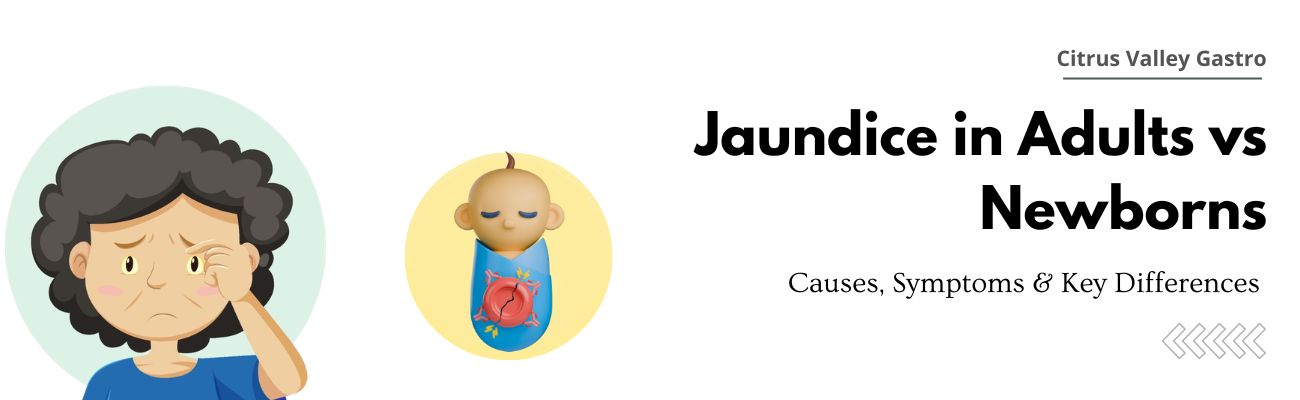
- Yellow-tinted skin and eyes are hard to miss — and for good reason. That visible change is your body's way of flagging a problem that needs attention. But here's what many people don't realize: jaundice in adults vs newborns is not the same condition playing out in different-sized bodies. The underlying mechanisms, causes, risk factors, and treatment approaches differ significantly between these two populations.
Understanding the Basics: What Is Jaundice?
Jaundice in Newborns (Neonatal Jaundice)
How Common Is It?
Neonatal jaundice is remarkably prevalent. According to the American Academy of Pediatrics, approximately 60% of full-term newborns and up to 80% of premature infants develop some degree of jaundice within the first week of life. In most cases, it is temporary and self-limiting.
Why Does It Happen?
At birth, a newborn's liver is still maturing. Simultaneously, the baby is transitioning from fetal hemoglobin to adult hemoglobin — a process that triggers accelerated red blood cell breakdown. The immature liver simply cannot keep up with the sudden bilirubin load.
This type is called physiological jaundice — it's a normal biological adjustment, not a disease.
However, some newborns develop pathological jaundice, which is more serious. Causes include:
- Blood type incompatibility between mother and baby (Rh or ABO incompatibility)
- Genetic conditions like G6PD deficiency
- Infections (sepsis)
- Biliary atresia (blocked bile ducts present from birth)
- Hemolytic disease of the newborn
Jaundice Symptoms to Watch For in Newborns:
- Yellowing starting from the face and spreading downward
- Poor feeding or unusual lethargy
- High-pitched crying
- Difficulty waking the baby
Critically, severe untreated neonatal jaundice can lead to kernicterus — a rare but serious form of brain damage caused by extremely high bilirubin levels penetrating brain tissue. Early detection is essential.
Adult Jaundice Symptoms and Causes
Why Adults Get Jaundice
Unlike in newborns, jaundice in adults is almost never physiological. It is always a sign of an underlying medical condition — typically involving the liver, bile ducts, or blood.
Adult jaundice symptoms and causes are classified into three categories:
1. Pre-hepatic — Excessive red blood cell destruction overwhelms the liver's processing capacity. Causes include hemolytic anemia, sickle cell disease, and malaria.
2. Hepatic — The liver itself is damaged or dysfunctional. Common causes:
- Viral hepatitis (A, B, or C)
- Alcoholic liver disease
- Non-alcoholic fatty liver disease (NAFLD)
- Cirrhosis
- Liver cancer
- Drug-induced liver injury
Recognizing Adult Jaundice Symptoms
- Dark, amber-colored urine
- Pale or clay-colored stools
- Persistent itching (pruritus)
- Fatigue and generalized weakness
- Upper right abdominal pain or tenderness
- Nausea, vomiting, or appetite loss
- Unexplained weight loss
- Fever (when infection is involved)
| Features | Newborns | Adults |
| Prevalence | Very common (60 - 80%) | Less common; always pathological |
| Primary Cause | Immature liver / physiological | Liver disease, bile obstruction, hemolysis |
| Onset | 2-4 days after birth | Variable; can be sudden or gradual |
| Duration | 1-3 weeks (physiological) | Depends on the underlying cause |
| Main Risk | Kernicterus (brain damage) | Liver failure, sepsis, cancer progression |
| Key Diagnostic Tool | Transcutaneous bilirubinometer / blood test | Blood panel, imaging, liver, biopsy |
| First-line Treatment | Phototherapy | Treat the underlying cause |
Treatment Approaches: How They Differ
Treating Neonatal Jaundice
Phototherapy — The gold standard for moderate-to-severe cases. Blue-spectrum light breaks down bilirubin in skin tissue, making it easier to excrete.
Adequate feeding — Frequent breastfeeding or formula feeding helps flush bilirubin through the digestive system.
Exchange transfusion — Reserved for critically high bilirubin levels that don't respond to phototherapy.
Monitoring — Most mild cases resolve without intervention within two weeks.
Treating Adult Jaundice
- Viral hepatitis — Antiviral therapy, rest, hydration, and liver-protective care
- Gallstone obstruction — Endoscopic removal (ERCP) or surgical intervention
- Alcoholic liver disease — Complete cessation of alcohol, nutritional rehabilitation
- Drug-induced jaundice — Discontinuation of the offending medication under physician supervision
- Advanced liver failure — Liver transplant evaluation by a specialist team
When to Seek Medical Attention
For Newborns — Contact your pediatrician immediately if:
- Yellowing spreads below the chest or to the palms and soles
- The baby is difficult to wake or refuses to feed
- Jaundice appears within the first 24 hours of birth
- Symptoms worsen after day 5
For Adults — See a doctor promptly if:
- You notice sudden yellowing of skin or eye whites
- Jaundice is accompanied by severe abdominal pain or high fever
- Urine turns dark, and stools become pale simultaneously
- You experience confusion or mental fogginess alongside yellow skin
FAQs:
1. What is the main difference between jaundice in adults vs newborns?
In newborns, jaundice is usually physiological — caused by an immature liver adjusting after birth — and often resolves on its own. In adults, jaundice always signals an underlying condition like liver disease or bile duct obstruction requiring medical evaluation.2. Is neonatal jaundice dangerous?
Mild neonatal jaundice is generally not dangerous and resolves within two to three weeks. However, severely elevated bilirubin levels left untreated can cause kernicterus — a form of brain damage. Prompt monitoring and phototherapy when needed prevent serious complications.3. What are the early adult jaundice symptoms to watch for?
Early adult jaundice symptoms include yellowing of the skin and eye whites, dark urine, and pale stools. These signs indicate rising bilirubin levels and should prompt a visit to a healthcare provider for blood tests and liver function evaluation.4. How is jaundice diagnosed differently in newborns versus adults?
In newborns, bilirubin levels are often measured using a non-invasive skin meter or heel-stick blood test. In adults, diagnosis involves comprehensive blood panels, liver enzyme tests, imaging studies like ultrasound or MRI, and sometimes a liver biopsy to identify the underlying cause.5. Can jaundice in adults resolve without treatment?
Adult jaundice rarely resolves without addressing its root cause. Unlike neonatal jaundice, which can be physiological and self-limiting, adult cases reflect an active medical condition — such as hepatitis, gallstones, or liver damage — that requires proper clinical management to improve bilirubin levels.Published on 21 May, 2026
