How Dehydration Secretly Triggers Intestinal Mucus
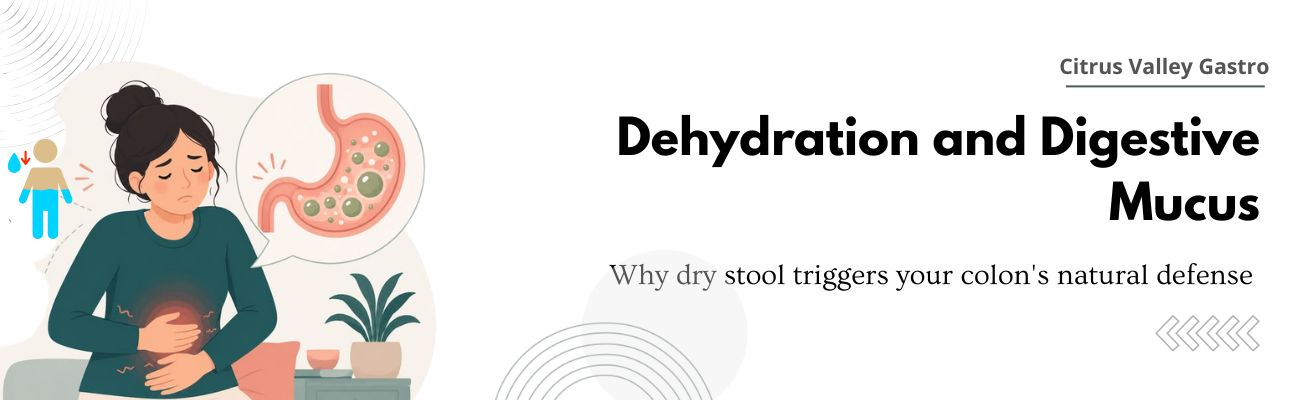
People usually connect mucus in the stool with diarrhea or an infection, but that assumption misses one of the most common and overlooked causes. Chronic dehydration and constipation can trigger the exact same response. When your body does not get enough water, your colon has to work overtime to move dry, hardened stool through the digestive tract, and one of its main defense tools is mucus. This article breaks down the mechanics behind this dehydration paradox, why your gut releases extra mucus when you are constipated, and what you can do to fix it before it becomes a bigger problem.
What Is Intestinal Mucus and Why Does the Colon Produce It
Mucus is not a symptom of something going wrong by default. It is a normal, healthy secretion produced by the lining of your large intestine. Goblet cells inside the colon wall constantly release a thin layer of mucus that coats the intestinal surface, protects it from friction, and helps stool glide through smoothly.
Under normal conditions, this mucus layer is so thin that most people never notice it in their stool. It only becomes visible or noticeable when the colon ramps up production, and dehydration is one of the most common triggers for that increase.
How Dehydration Sets Off the Chain Reaction
Why Dry Stool Increases Mucus Production in the Colon
This is where the paradox becomes clear. Dry, hard stool does not move easily. It scrapes against the intestinal wall as it travels toward the rectum, creating friction and irritation. The colon senses this friction and responds the way any protective tissue would. It increases mucus secretion to create a buffer between the stool and the sensitive lining underneath.
Think of it as a built in lubrication system kicking into a higher gear. The drier the stool, the more resistance it creates, and the more mucus your body produces to try to ease its passage. In mild cases, this extra mucus is enough to help stool pass without much difficulty. In more severe or prolonged constipation, the mucus becomes visible, often appearing as a clear, white, or slightly yellow coating on the stool.
How Straining During Bowel Movements Leads to More Mucus
Constipation rarely stays isolated to just dry stool. It usually leads to straining, and straining puts real mechanical stress on the rectal and anal tissue. Repeated straining can cause tiny micro tears in the delicate lining of the anal canal, even if they are too small to see or feel directly.
Your body treats these micro tears as an injury risk and responds accordingly. Mucus production increases even further to cushion the area and reduce direct trauma during each bowel movement. This is one reason people with chronic constipation often notice more mucus over time, not less. The strain and dryness create a cycle where the colon keeps compensating harder with each passing stool.
If straining continues without addressing the underlying dehydration, this cycle can also contribute to hemorrhoids or anal fissures, which come with their own mucus and discomfort.
Common Signs of Mucus in Stool From Dehydration
Not all mucus in stool points to the same cause, but a few patterns are common with dehydration driven constipation. These include stool that looks hard, lumpy, or pellet like, a noticeable clear or white coating on the stool, straining or a feeling of incomplete emptying, fewer than three bowel movements a week, and mild discomfort or a scraping sensation during passage.
If mucus appears alongside blood, severe pain, fever, or unexplained weight loss, that points to something beyond simple dehydration and needs medical attention right away.
How to Reduce Mucus in Stool by Improving Hydration
The good news is that dehydration related mucus usually responds well to simple, consistent changes.
- Increase daily water intake: Most adults need around two to three liters of water a day, though this varies with body weight, activity level, and climate. Spreading intake evenly through the day works better than drinking large amounts at once.
- Add soluble fiber gradually: Foods like oats, bananas, and psyllium husk absorb water and add bulk to stool, making it easier to pass without excess strain. Add fiber slowly and with adequate water, since fiber without enough fluid can make constipation worse.
- Avoid excess caffeine and alcohol: Both have a mild diuretic effect that can pull more water out of your system, working against your hydration goals.
- Move your body daily: Physical activity stimulates natural intestinal motility, helping waste move through the colon before it dries out excessively.
- Do not delay the urge to go: Holding in a bowel movement gives the colon more time to absorb water from the stool, making it harder and drier by the time you do go.
When to See a Gastroenterologist for Mucus in Stool
FAQs:
1. Can dehydration cause mucus in stool?
Yes. When the body lacks enough water, the colon absorbs more fluid from waste material, creating dry, hard stool. This dryness increases friction inside the colon, prompting it to release extra mucus as a natural lubricant to help stool pass more easily.2. Is mucus in stool from constipation dangerous?
In most cases, mucus caused by constipation and mild dehydration is not dangerous and resolves with better hydration and fiber intake. It becomes a concern only if it is accompanied by blood, severe pain, or persists for several weeks.3. How much water should I drink to stop mucus in my stool?
Most adults benefit from two to three liters of water daily, spread evenly throughout the day. Individual needs vary based on body weight, activity level, and climate, so adjust intake gradually while monitoring stool consistency.4. What does mucus from constipation look like?
Mucus linked to constipation typically appears as a thin, clear, white, or slightly yellow coating on the surface of hard or lumpy stool. It is usually minimal in amount compared to mucus caused by infections or inflammatory conditions.5. Does straining during bowel movements increase mucus production?
Yes. Straining puts mechanical stress on the rectal lining and can create tiny micro tears. The body responds by increasing mucus secretion to protect and cushion the area, which is why chronic straining often leads to more noticeable mucus over time.Published on 23 Sep, 2026
